
Your shopping cart is empty!
Rug Sizing Guide: How to Choose the Right Rug Size for Every Room | Natural Rugs Co.
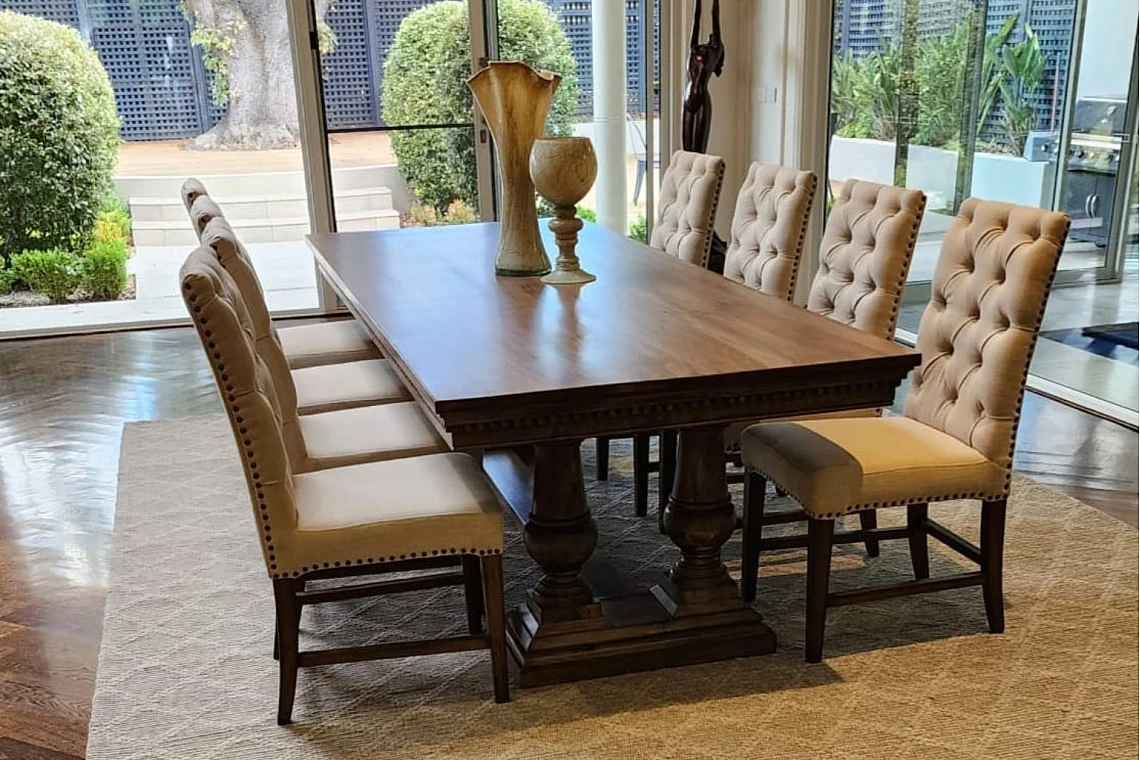
Choosing the right rug size can completely change how a room feels. A rug that is too small can make the furniture appear disconnected, while a correctly sized rug brings everything together and makes the space feel more generous.
All schematic illustrations in this guide are drawn to scale to accurately demonstrate the proportions between rugs and furniture. Use this guide as a starting point, then measure your room and furniture before making your final selection.
Living Room Rug Size: Standard Sofa
The rug should connect the sofa with the surrounding furniture rather than sitting like a small island beneath the coffee table.
Recommended placement
Position the rug so that:
- At least the front legs of the sofa sit on the rug.
- The front legs of nearby armchairs or occasional chairs also reach the rug.
- The rug extends beyond both ends of the sofa where space allows.
- There is a comfortable border of visible flooring around the rug.
Common rug sizes
- 160 × 230 cm: Suitable for a compact living room or a small two-seater sofa.
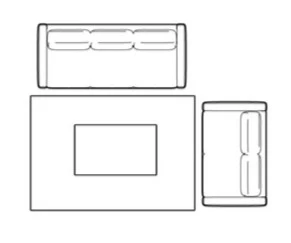
- 200 × 290 cm: A versatile choice for most standard three-seater sofa arrangements.
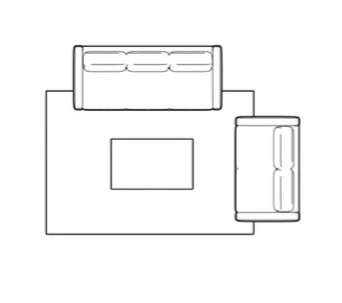
- 240 × 330 cm: Ideal for a larger living room with a sofa and multiple chairs.
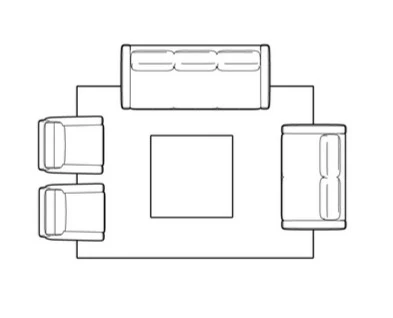
- 300 × 400 cm: Best for spacious rooms where all furniture can sit fully on the rug.
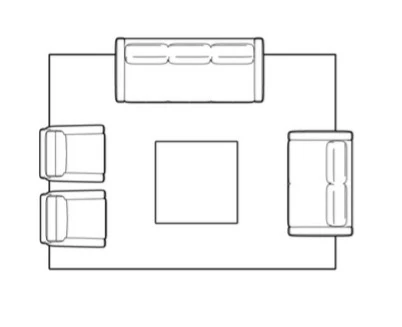
As a general rule, choose a rug that is at least slightly wider than your sofa. If you are deciding between two sizes, the larger rug will usually make the room look more balanced.
Living Room Rug Size: L-Shaped Sofa
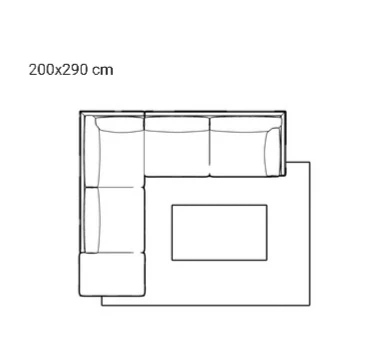
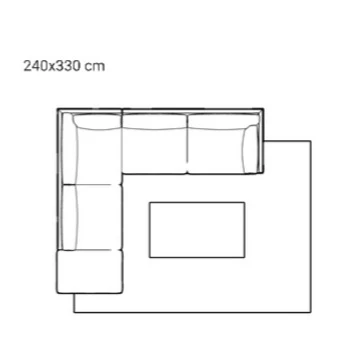
An L-shaped or modular sofa needs a sufficiently large rug to visually anchor its scale. A small rug placed only under the coffee table can make the sofa feel oversized and the room look fragmented.
Recommended placement
Ideally:
- The front legs of the entire sofa sit on the rug.
- The rug extends beyond both ends of the sofa.
- The coffee table sits comfortably within the rug, with space around it.
- In a large open-plan room, the whole sofa can sit on the rug to define the living zone.
Common rug sizes
- 200 × 290 cm: Suitable for a compact L-shaped sofa and a smaller room.
- 240 × 330 cm: A strong option for most medium-sized modular sofas.
- 300 × 400 cm: Best for large L-shaped sofas and open-plan living areas.
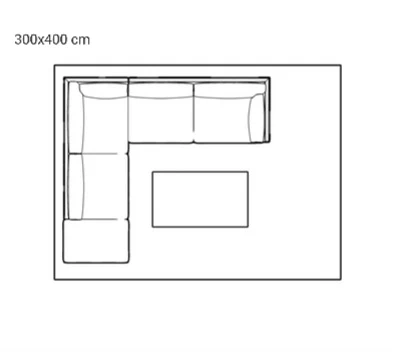
Measure the full width and depth of the sofa, not only the main section, before choosing your rug.
Dining Room Rug Size
A dining rug must be large enough to accommodate both the table and the chairs when they are pulled out. If the rug is too small, chair legs can catch on its edge whenever someone sits down or stands up.
Allow approximately 60–75 cm of rug beyond every side of the dining table.
Common rug sizes
- 160 × 230 cm: Often suitable for a compact four-seat dining table.
- 200 × 290 cm: Generally suitable for four- to six-seat tables.
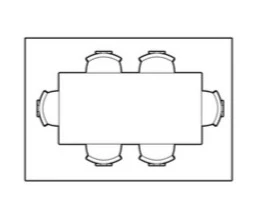
- 240 × 330 cm: A good choice for six- to eight-seat tables.
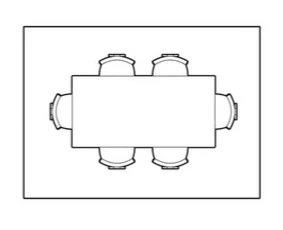
- 300 × 400 cm: Suitable for large eight- to ten-seat tables.
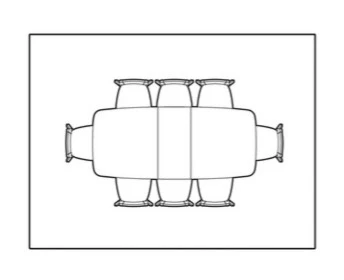
Always measure the tabletop and add at least 120 cm to both its length and width. For example, a table measuring 100 × 200 cm will generally need a rug of approximately 220 × 320 cm or larger.
Round Dining Tables
A round dining table can be paired with either a round or rectangular rug. A round rug echoes the shape of the table and creates a balanced, cohesive setting, while a rectangular rug can help define the dining area within a larger or open-plan room.
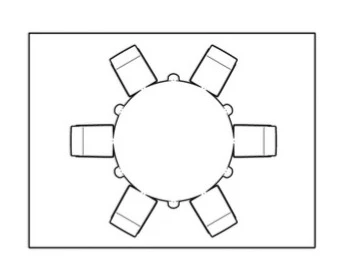
Whichever shape you choose, the rug should extend approximately 60–75 cm beyond the table on every side, allowing the chairs to remain fully on the rug when pulled out.
For a round rug, measure the diameter of the table and add at least 120–150 cm. For example, a 150 cm round table will generally require a rug approximately 270–300 cm in diameter.
For a rectangular rug, ensure the same clearance is maintained around the entire table. As shown in the illustration, a 300 × 400 cm rug provides generous space for a large round dining table and six chairs while clearly defining the dining zone.
Bedroom Rug Size
In a bedroom, the rug should provide softness where you step out of bed while visually anchoring the bed and bedside tables.
There are two common placement options:
- Under the lower two-thirds of the bed: The rug begins in front of the bedside tables and extends beyond the sides and foot of the bed.
- Under the entire bed: The rug sits beneath the bed and bedside tables, creating a more luxurious and generous look.
Single Bed
For a single bed:
- 120 × 170 cm: Can be placed beside the bed or horizontally beneath the lower section.
- 160 × 230 cm: Provides more coverage beneath the bed and along its sides.
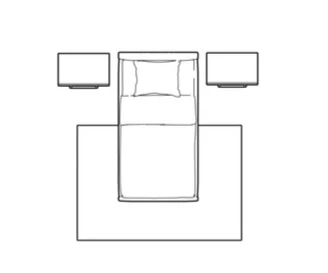
- 200 x 290 cm: This placement works especially well in a spacious bedroom and gives the room a balanced, luxurious appearance.
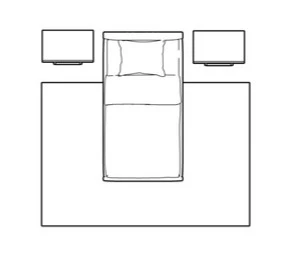
- Two runners: A practical alternative when the bed sits close to a wall or when only bedside softness is needed.
Double Bed
For a double bed:
- 160 × 230 cm: Suitable beneath the lower two-thirds of the bed.
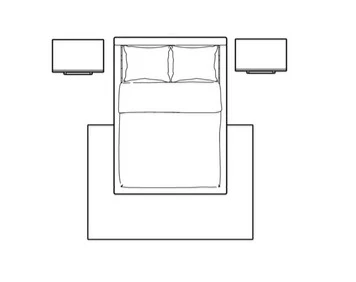
- 200 × 290 cm: Provides better coverage and a more balanced frame around the bed.
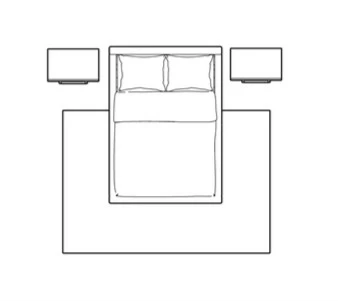
- 240 x 330 cm: Provides generous coverage beneath a double bed, creating a well-proportioned and luxurious arrangement.
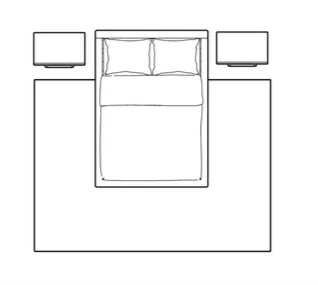
Queen Bed
For a queen bed:
- 200 × 290 cm: A practical size beneath the lower two-thirds of the bed.
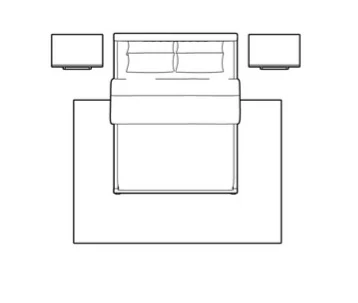
- 240 × 330 cm: Offers more generous coverage and can extend beneath the bedside tables.
- 300 × 400 cm: Provides luxurious, well-proportioned coverage beneath a queen bed, extending generously beyond both sides and the foot. Position it beneath the entire bed but in front of the bedside tables to create a spacious, fully anchored look.
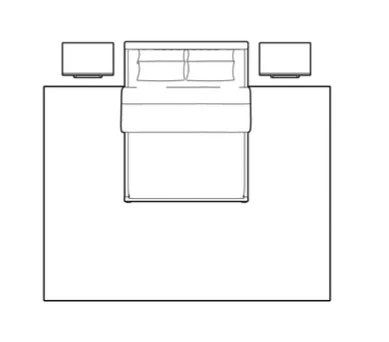
For most queen bedrooms, 200 × 290 cm is the minimum size we recommend when placing one rug beneath the bed.
King Bed
A king bed requires a large rug to remain visually proportional.
- 200 x 290 cm. Sometimes, the size of the room calls for a compromise. In this case, a 200 × 290 cm rug could work, but I wouldn’t go any smaller. Position it so it extends roughly halfway under the bed.
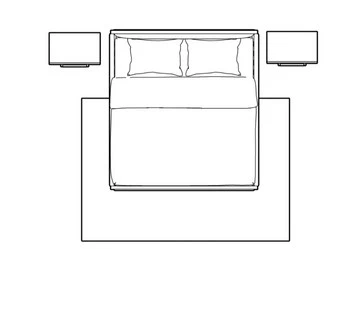
- 240 × 330 cm: Suitable beneath the lower two-thirds of the bed.
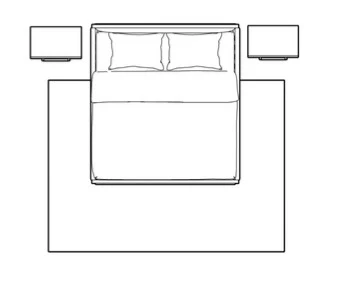
- 300 × 400 cm: Provides generous coverage around the bed and can accommodate the bedside tables.
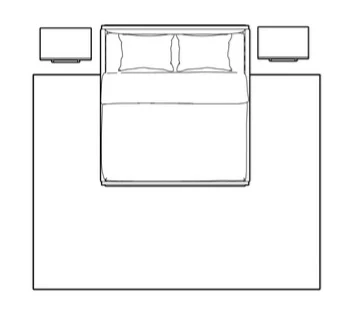
Avoid using a small rug beneath a king bed. Most of it will disappear under the mattress, leaving too little visible around the edges.
Before You Choose Your Rug
Mark the proposed rug dimensions on the floor using painter’s tape. This allows you to see exactly where the edges will fall in relation to your sofa, dining chairs, bed, doors and walkways.
Remember to consider:
- The full dimensions of your furniture.
- Whether doors can open freely.
- The position of floor vents and fireplaces.
- The amount of visible flooring you want around the rug.
- How the rug will define the room in an open-plan space.
When in doubt, sizing up is usually the better decision. A larger rug makes a room feel connected and intentional, while a rug that is too small can make even beautiful furniture feel disconnected.